
Hollow Cheeks and Sunken Temples: Why Your Face Loses Volume and What Can Help
There's a specific moment most people notice it. You catch yourself in a photo or a video call and something looks different. Your cheeks don't look as full as they used to. Your temples seem a bit hollow. Your face looks a little more drawn, even though you feel fine. It's not weight loss. It's not tiredness. It's facial volume loss, and it's one of the most common (and least talked about) parts of ageing.
What Is Facial Volume Loss?
Your face isn't just skin stretched over bone. Underneath the surface, there are layers of fat, muscle, and connective tissue that give the face its shape, fullness, and contour. These layers sit in specific compartments, and when they're full and well-supported, the face looks smooth, lifted, and youthful.
Facial volume loss happens when these layers start to thin out. The fat pads shrink. The supporting tissue weakens. And the visible result is a face that looks flatter, more hollow, or less defined than it once did.
Where Does Volume Loss Show Up First?
The temples are often the first area to hollow out, though most people don't realise it's happening because they're not looking for it. Sunken temples create a shadow effect around the upper face that can make you look tired or older than you are.
The cheeks are next. Full, rounded cheeks are one of the hallmarks of a youthful face. When the fat pads in the midface shrink and descend, the cheeks flatten and the area under the eyes can start to look hollow or shadowed.
The area around the mouth also loses support over time. As the midface flattens, deeper folds can form between the nose and the corners of the mouth, and the lower face can start to look heavier as volume shifts downward.
The jawline can lose its definition too. Without the volume above it to provide contrast and structure, the jaw can appear softer, less angular, or less distinct.
Why Does It Happen?
A few things are going on at once.
The fat pads in the face naturally shrink with age. This starts as early as your late 20s and becomes more noticeable through your 30s, 40s, and beyond. The fat doesn't just disappear evenly either. It tends to reduce more in the upper and mid face while shifting or accumulating in the lower face, which is why many people feel like their face is "dropping" over time.
The bones of the face also change. The skull doesn't stay the same shape forever. The eye sockets widen slightly, the cheekbones lose projection, and the jawbone recedes. This reduces the scaffolding that supports everything above it.
On top of that, the body produces less collagen as you age, so the skin and connective tissue become thinner and less able to hold things in place.


What Makes It Worse?
Genetics are the biggest factor. Some people naturally have fuller faces that hold volume well into middle age. Others have leaner facial structures that show volume loss earlier and more dramatically.
Rapid weight loss can accelerate the appearance of facial hollowing, because when the body loses fat, the face often loses it too, and it doesn't come back evenly.
Sun damage, smoking, stress, and poor nutrition can all speed up the breakdown of collagen and the overall ageing of the facial tissues.
What Can Be Done?
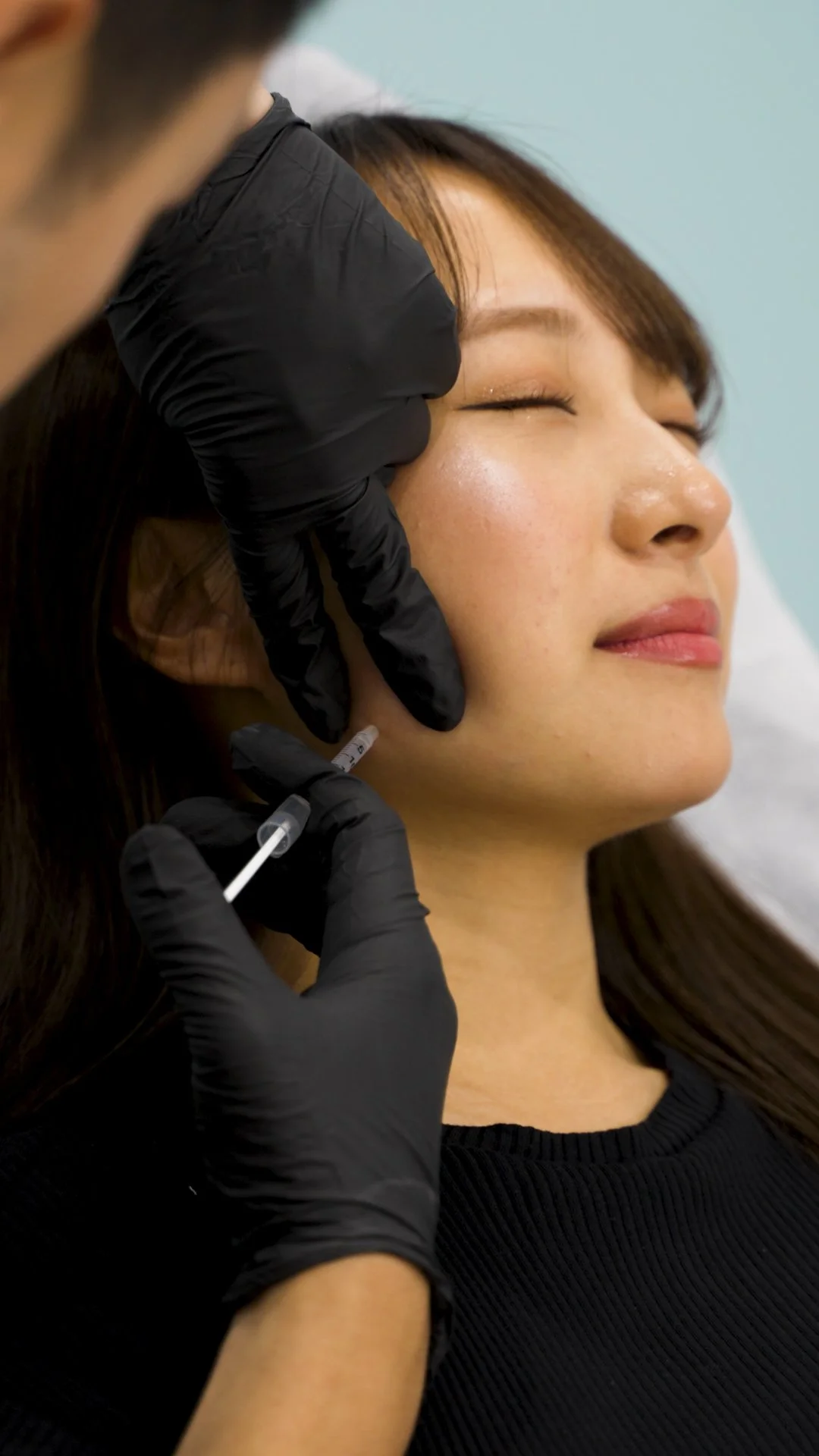
Non-surgical treatments for facial volume loss work by restoring volume to the areas where it's been lost. By placing product in specific zones like the cheeks, temples, or jawline, a practitioner can rebuild structure, lift the midface, and restore the contour and balance that time has gradually taken away.
The goal isn't to overfill or change the way your face looks. It's to put back what's been lost so your face looks like a refreshed, well-rested version of itself.
Results are visible almost immediately and typically last anywhere from 12 to 24 months depending on the area treated and the product used. Most people find that a subtle, well-placed treatment makes a bigger difference than they expected, because volume is often the missing piece that pulls the whole face together.
How to Know If Volume Loss Is Your Issue
A simple test is to look at a photo of yourself from five or ten years ago and compare it to now. If the main difference isn't wrinkles but rather a change in shape, fullness, or contour, volume loss is likely the primary driver.
A consultation with a qualified practitioner can confirm this. They'll assess your facial structure, identify where volume has been lost, and talk you through whether treatment is appropriate and what kind of result you can realistically expect.
This content is intended for educational purposes and does not constitute medical advice or a recommendation for treatment. Only licensed healthcare providers should perform injectable procedures.
