
Non-Surgical Nose Job for a Flat Nose Bridge: Why It's So Popular with Asian Patients
If there's one group of patients who get the most out of non-surgical rhinoplasty, it's people with a flat or low nose bridge. And that includes a large number of patients of Asian descent.
This isn't a generalisation pulled out of thin air. It comes down to real anatomical differences in nasal structure that make non-surgical rhinoplasty an especially good fit for this group. Here's why.
Why Asian Noses Tend to Have a Flatter Bridge
The shape of your nose is determined by the underlying bone and cartilage structure, along with the thickness of the skin covering it. In people of East Asian, Southeast Asian, and South Asian descent, there are a few common anatomical traits that contribute to a flatter nasal profile.
The nasal bones in Asian patients tend to be shorter and less projected compared to those of Caucasian patients. This means the bridge of the nose, the part that runs between your eyes and down to the tip, sits lower on the face. Rather than a prominent ridge, the bridge blends more gradually into the surrounding facial structure.
On top of that, the cartilage in the lower part of the nose is often softer and less rigid, which can result in a rounder, less defined nasal tip. The skin covering the nose also tends to be thicker, which can further soften the appearance of any underlying structure.
These aren't flaws. They're simply characteristics of Asian nasal anatomy. But for people who want a bit more height, definition, or contour in their nose bridge, they're the exact features that non-surgical rhinoplasty is designed to address.
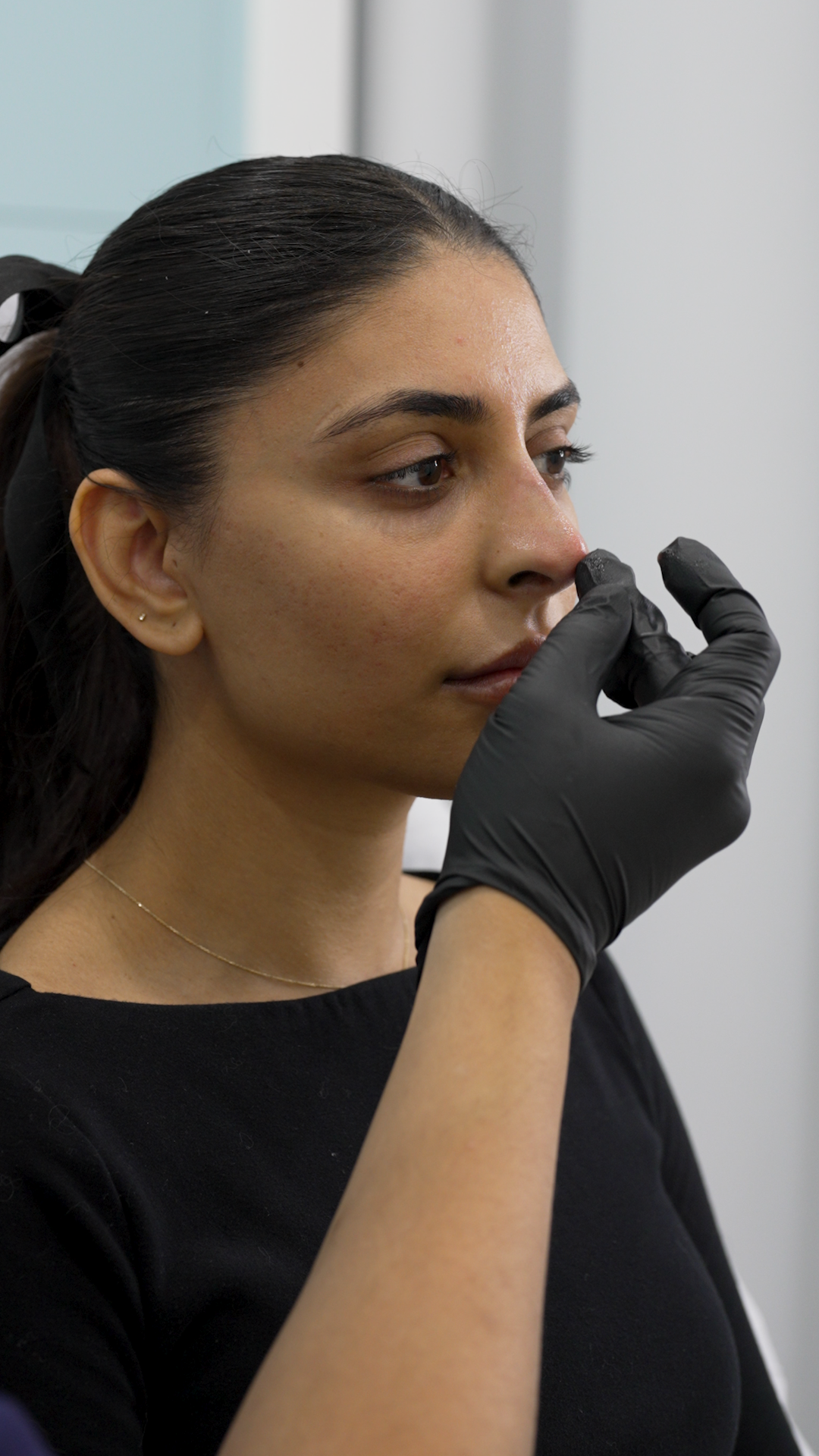
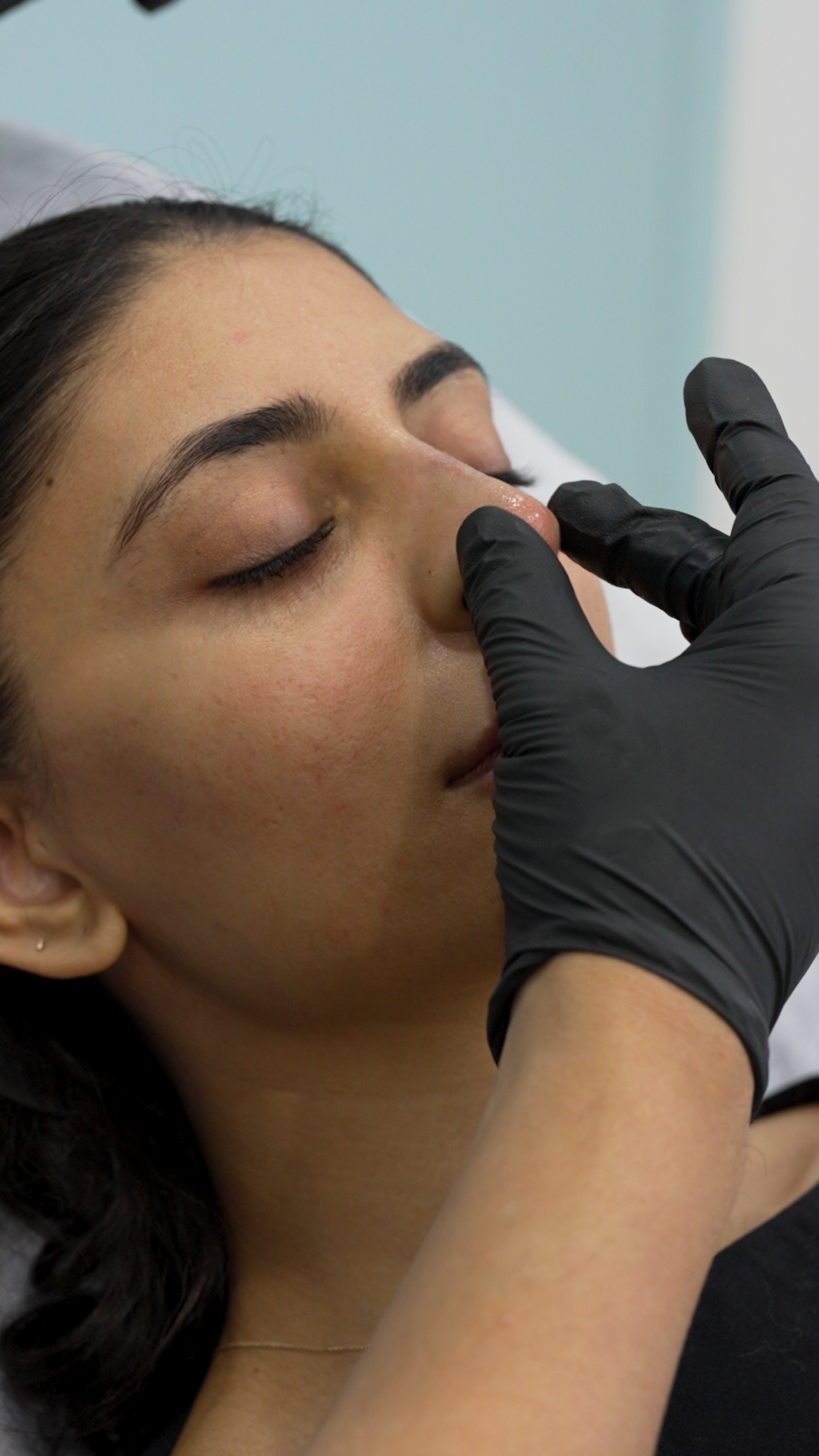
Why Non-Surgical Rhinoplasty Works So Well for Flat Bridges
Unlike surgical rhinoplasty for Caucasian patients, which typically focuses on reducing or reshaping the nose, the goal for most Asian patients is the opposite: augmentation. They want to add height, build definition, and create a more contoured profile.
This is exactly what non-surgical rhinoplasty does. The treatment adds volume to specific areas of the nose to build up the bridge, create a smoother transition from the brow to the tip, and give the nose a more sculpted, angular shape from the front.
For someone with a flat bridge, even a small amount of product placed along the dorsum (the top of the nose) can make a noticeable difference. The nose looks more defined, the profile looks straighter, and the overall facial proportions feel more balanced.
It's the kind of subtle change that a lot of people describe as looking like they've done their makeup really well, except the result doesn't wash off at the end of the day.
What Makes Someone a Good Candidate
The best candidates for this treatment are people who want a subtle to moderate increase in bridge height without going through surgery.
Specifically, it tends to work well if you have a naturally flat or low nose bridge and want more height and definition, you want your nose to look more contoured and structured from the front and side, you're looking for a result that looks natural and not overdone, you'd rather avoid surgery, general anaesthetic, and a long recovery, and you want to see what a higher bridge looks like before committing to anything permanent.
It's also a popular option for people who currently use makeup techniques like nose contouring to create the illusion of a higher bridge. Non-surgical rhinoplasty can achieve a similar effect, but as an actual three-dimensional change that's visible from every angle, not just head-on.
What It Won't Do
The treatment can add height and definition. However It can't change the internal structure, so it won't help with breathing issues. For those concerns, surgical rhinoplasty is the appropriate option.
The procedure can't narrow the nose or make the nose physically smaller. Narrowing the nose can be done with Neuromodulators which helps to reduce nasal flaring and reduce nostril width.
It's also worth noting that thicker nasal skin, which is common in Asian patients, can sometimes limit how much definition comes through. A good practitioner will factor this into their assessment and set realistic expectations during the consultation.
A Treatment Built for This Exact Concern
Non-surgical rhinoplasty wasn't designed to do everything. But for the specific goal of adding height and contour to a flat nose bridge, it's one of the best-suited cosmetic treatments available. It's quick, requires no downtime, and delivers visible results straight away.
For Asian patients in particular, it offers something that surgical rhinoplasty has traditionally dominated: the ability to enhance the nose in a way that respects and works with natural ethnic features, rather than trying to change them entirely.
This content is intended for educational purposes and does not constitute medical advice or a recommendation for treatment. Only licensed healthcare providers should perform injectable procedures.
Liquid Rhinoplasty Case Studies


