
Can You Get a Non-Surgical Nose Job After Rhinoplasty Surgery?
You've had a surgical nose job. You've been through the recovery, waited for the swelling to go down, and given it time. But now that everything has settled, something still isn't quite right. Maybe there's a small bump that wasn't there before. Maybe the bridge isn't as smooth as you expected. Maybe one side looks slightly different from the other.
It's more common than you'd think. Research suggests that roughly 1 in 10 surgical rhinoplasty patients look into some form of touch-up afterward. But going back into surgery can feel like a big deal. The good news is that for many of these small issues, non-surgical rhinoplasty can help.
What Kind of Post-Surgery Issues Can the Treatment Help With?
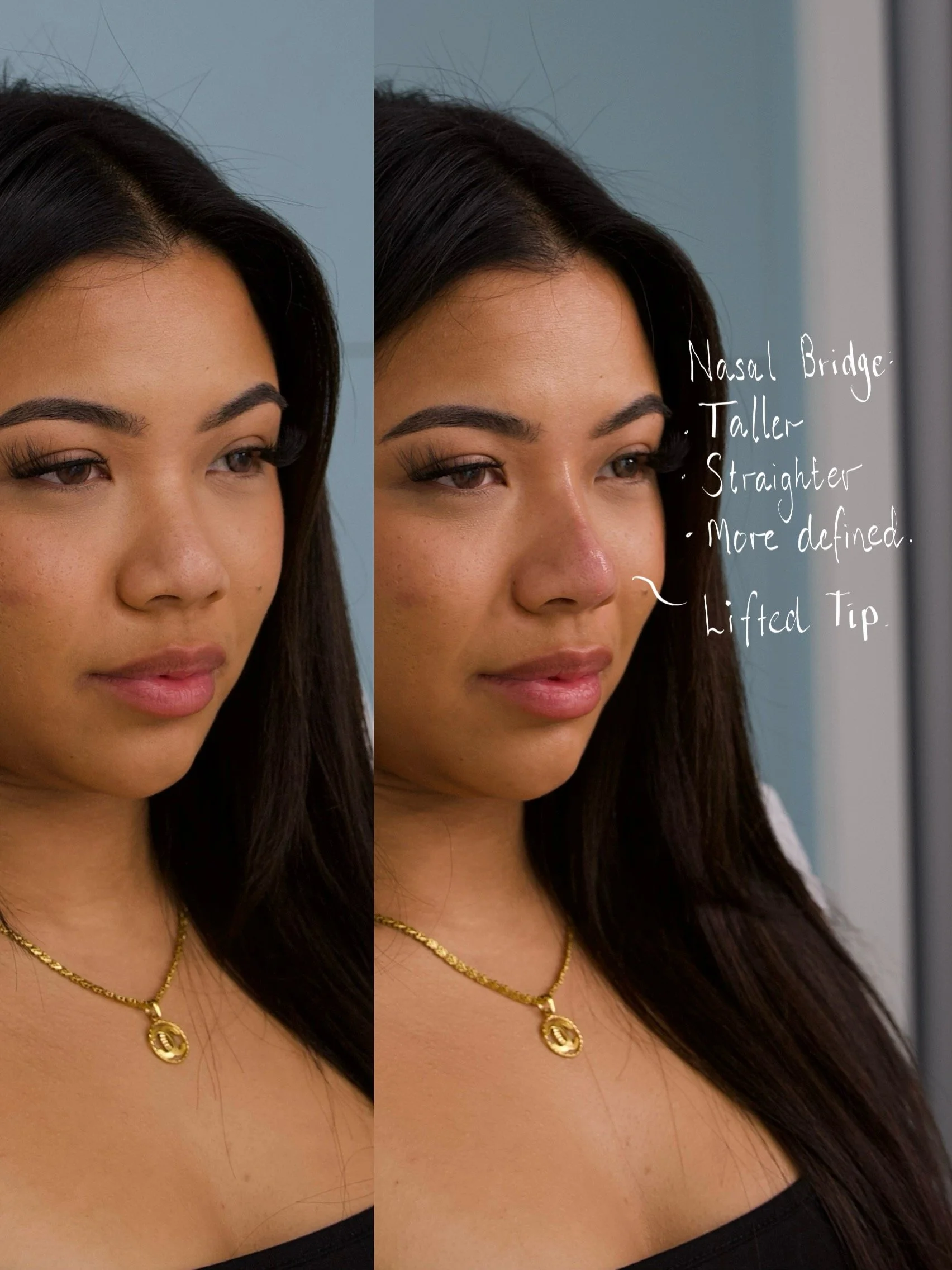
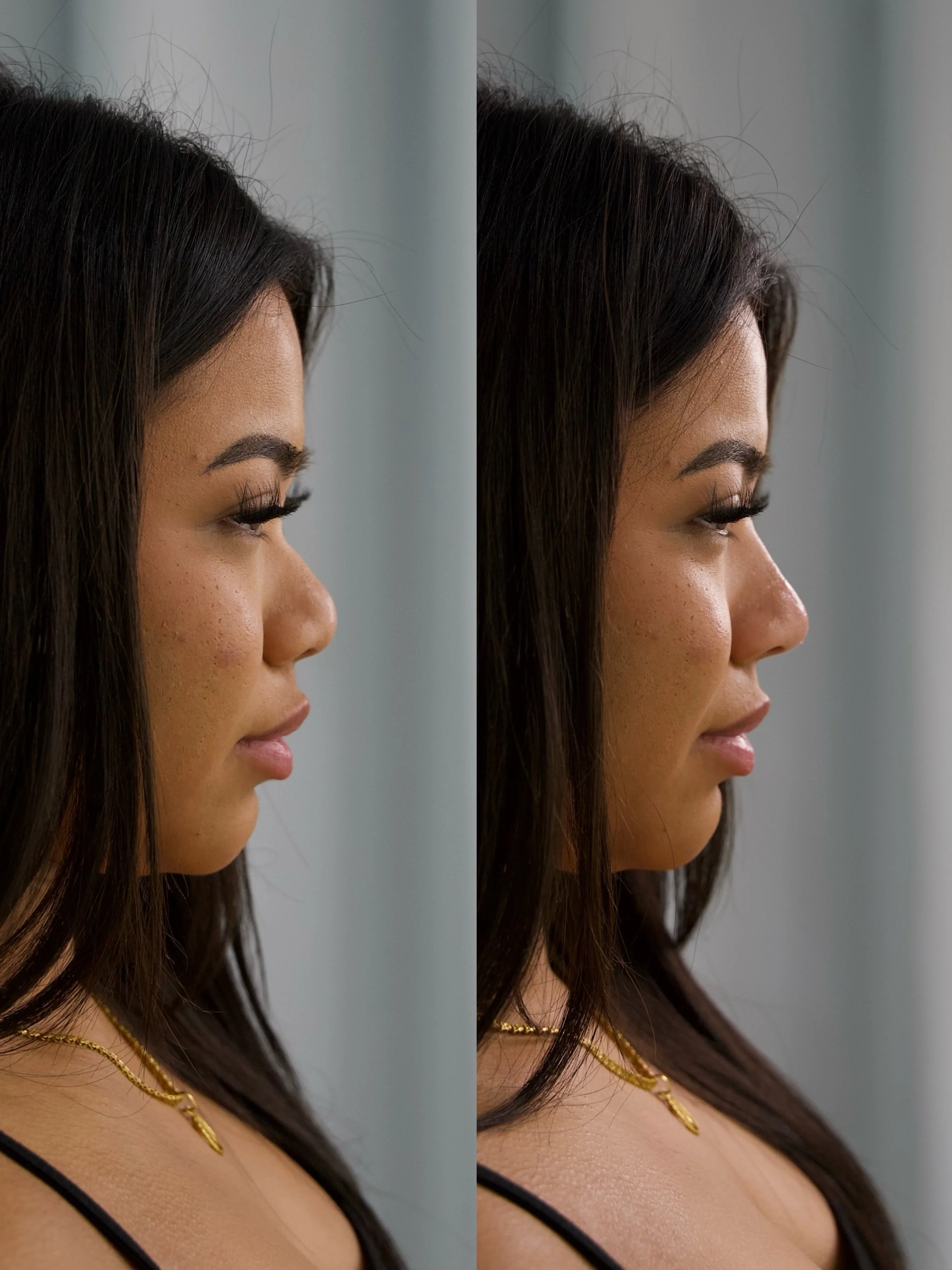
Using non-surgical rhinoplasty after a previous nose surgery is actually one of the best applications of the treatment. It works well for things like small bumps or irregularities on the bridge that showed up during healing, minor asymmetry between the two sides, a slight dip or depression along the top of the nose, a tip that lost a bit of shape or projection as it healed, and visible contour issues where bone or cartilage was reshaped.
Because these concerns are usually subtle, they're a great match for what non-surgical rhinoplasty does best. A tiny amount of product in the right spot can make a real difference.
What It Can't Do
The Treatment can't reverse a surgical result you're unhappy with overall. If the nose is way too big, way too small, severely crooked, or has collapsed in some area, that's revision surgery territory.
It also can't fix breathing problems that came about after surgery.
How Long Should You Wait After Surgery?
This is really important. You shouldn't rush into non-surgical rhinoplasty too soon after a surgical nose job. Most practitioners say to wait at least 12 months, and sometimes longer.
The reason is that your nose keeps changing shape as it heals. Swelling can take many months to fully go away, especially around the tip. Something that looks like a problem at six months might sort itself out by month twelve or beyond. Trying to "fix" things with the treatment before healing is done can actually create new issues.
Is It Safe to Inject a Nose That's Been Operated On?
Yes, but it takes extra care. A nose that's been through surgery may have scar tissue, changes in blood flow, and different tissue layers compared to one that hasn't been touched. The person doing the injecting needs to understand these differences and adjust their approach.
This is another reason why practitioner experience matters. Not all injectors are comfortable working with post-surgical noses, and that's okay. The important thing is finding someone who is.
The Takeaway
Non-surgical rhinoplasty after surgery is a real option for smoothing out small imperfections. It's less invasive, less expensive, and a lot less stressful than going back under the knife. For the right concerns, it works well.
The main thing is to wait long enough for your nose to fully heal, and to work with a practitioner who has experience with post-surgical anatomy. Patience and the right hands go a long way.
This content is intended for educational purposes and does not constitute medical advice or a recommendation for treatment. Only licensed healthcare providers should perform injectable procedures.
Liquid Rhinoplasty Case Studies


